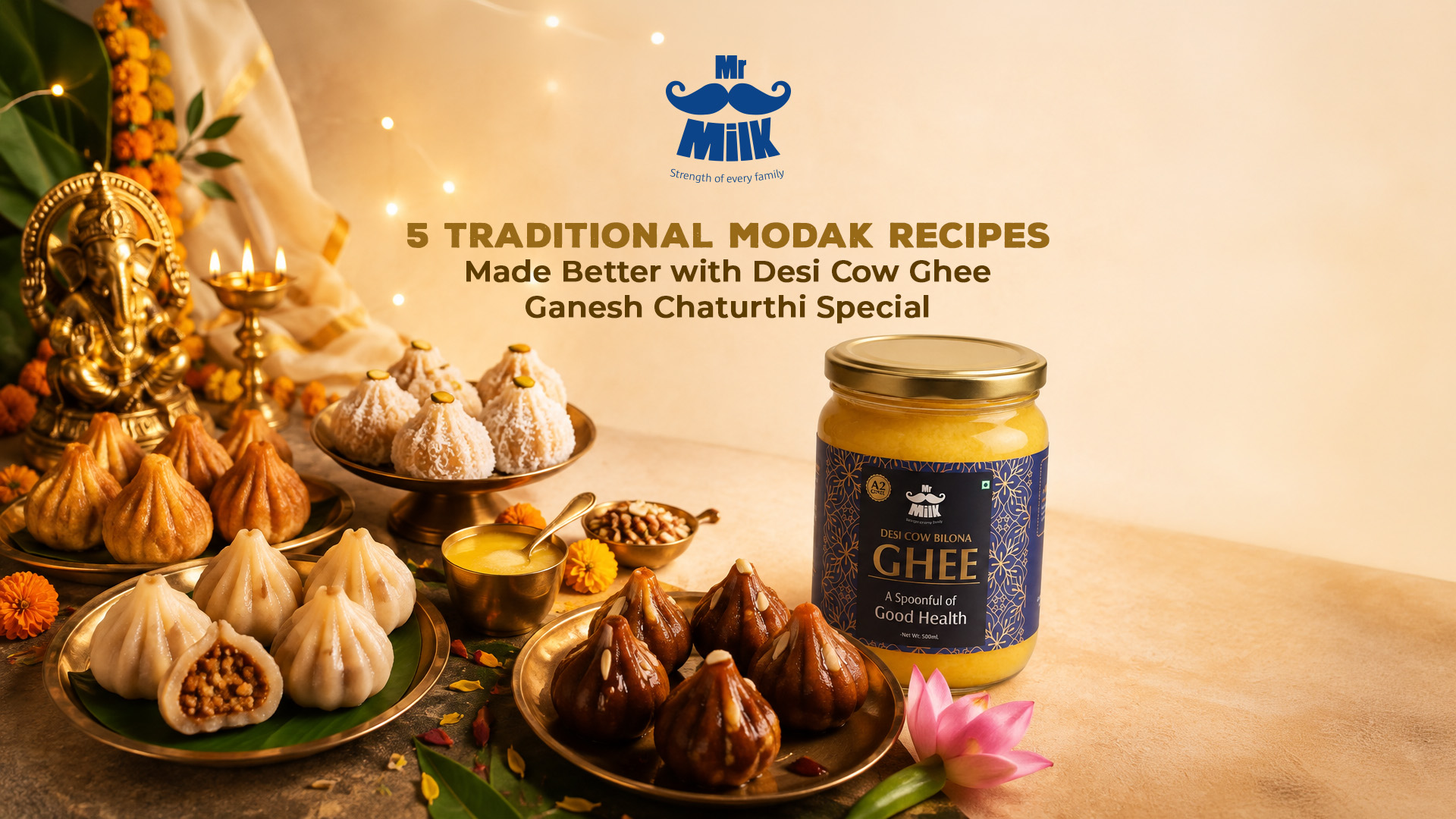
5 Traditional Modak Recipes Made Better with Desi Cow Ghee Ganesh Chaturthi Special
Summary:
This festive blog post explores five authentic modak recipes specifically curated for Ganesh Chaturthi, highlighting how pure desi cow ghee elevates each variation. From maintaining moisture in steamed Ukadiche Modak to adding richness and golden perfection to fried and dry-fruit varieties, desi cow ghee plays an essential role in enhancing authentic flavours, digestibility, and traditional aroma for Lord Ganesha’s sacred offering.
Key Highlights:
Pure Festive Flavour: Demonstrates how aromatic desi cow ghee replaces standard fats to create deeply satisfying, authentic sweet treats.
5 Traditional Variations: Features a mix of popular styles, including steamed Ukadiche Modak, classic Fried Modak, Mawa Modak, Dry Fruit Modak, and Rava Modak.
Enhanced Texture & Aroma: Details how pure cow ghee keeps steamed outer covers soft, ensures fried modaks turn out crisp, and gives fillings a luscious mouthfeel.
Nourishing Prasad Option: Emphasises the traditional health and digestive benefits of using unadulterated A2 desi cow ghee in festive cooking.
Ganesh Chaturthi in India is as much about food as it is about devotion, family, and tradition. And when Lord Ganesha is welcomed home, few sweets feel more special than a freshly prepared modak.
From the classic steamed ukadiche modak to wide fried varieties, every family has its own favourite recipe. But there is one traditional ingredient that can make a noticeable difference to flavour, aroma, and texture: Desi Cow Bilona Ghee.
Made using the traditional bilona method, this ghee brings a rich, naturally aromatic character to festive recipes. Whether you are preparing modaks for your home puja or making a larger batch to share with family and friends, choosing a good-quality ghee can elevate even a simple recipe.
This Ganesh Chaturthi, try these five traditional modak recipes with Desi Cow Ghee.
Why use Desi Cow Ghee for making modaks?
Ghee has been a part of Indian festive cooking for generations. It is valued for its rich flavour, high cooking versatility, and ability to add a satisfying aroma to sweets and savoury dishes.
When used in modaks, Desi Cow Ghee can help:
Enhance flavour: Its rich, buttery aroma complements coconut, jaggery, nuts, and cardamom.
Improve texture: A little ghee can add softness and richness to fillings and doughs.
Add festive aroma: Ghee brings the familiar fragrance associated with traditional Indian mithai.
Balance sweetness: The richness of ghee works particularly well with jaggery-based fillings.
Make recipes feel more traditional: Ghee has long been used in Indian festive and religious preparations.
If you are looking for the benefits of Desi Cow Ghee, it is useful to distinguish culinary benefits from health claims. Ghee can certainly contribute flavour, texture, and energy to a recipe, but it is still a calorie-dense fat and is best enjoyed as part of a balanced diet.
What makes traditional bilona ghee different?
Traditional bilona ghee is made by churning curd to separate butter, then heating it to make ghee. The bilona method is valued particularly for its traditional character and the depth of flavour it can bring to the finished ghee.
For families who prefer products made with traditional methods, ghee sourced from Desi Cows, including breeds such as Gir Cows, can be an appealing choice. However, the quality of the finished product depends on several factors, including sourcing, hygiene, processing, storage, and manufacturing practices.
Now, let's get to the delicious part.
5 Traditional Modak Recipes with Desi Cow Ghee
1. Classic Ukadiche Modak with Desi Cow Ghee:
If there is one modak that defines Ganesh Chaturthi for many Maharashtrian families, it is the soft, steamed ukadiche modak. The combination of rice flour, coconut, jaggery, cardamom, and ghee creates a simple but deeply satisfying festive sweet.
Ingredients:
For the outer covering:
1 cup rice flour
1¼ cups water
1 tsp Desi Cow Bilona Ghee
A pinch of salt
For the filling:
1 cup grated fresh coconut
¾ cup grated jaggery
½ tsp cardamom powder
1-2 tsp Desi Cow Ghee
A small amount of nutmeg, optional
Method:
Heat the ghee in a pan and lightly cook the grated coconut. Add jaggery and cook until the mixture comes together. Add cardamom and nutmeg, then allow the filling to cool.
For the covering, boil water with salt and ghee. Gradually add rice flour and mix well. Once warm enough to handle, knead it into a smooth, soft dough.
Shape small portions into cups, fill them with the coconut-jaggery mixture, and carefully pleat the edges. Steam for approximately 10-15 minutes.
Tip: A little ghee in the dough helps keep the covering soft and prevents it from feeling dry.
2. Fried Coconut-Jaggery Modak:
Prefer your modaks crisp rather than steamed? Fried modaks are a wonderful festive alternative.
The outer layer becomes golden and crunchy while the coconut-jaggery filling remains soft and aromatic.
Ingredients:
1 cup refined flour or whole wheat flour
2 tbsp Desi Cow Ghee
Water as required
1 cup grated coconut
¾ cup jaggery
½ tsp cardamom powder
Chopped nuts, optional
Oil or ghee for frying
Method:
Mix flour and ghee until the mixture resembles breadcrumbs. Add water gradually and prepare a firm dough.
For the filling, cook coconut and jaggery together until the mixture thickens. Add cardamom and nuts.
Roll the dough into small discs, place the filling in the centre, and shape into modaks. Fry on medium heat until golden and crisp.
Tip: Do not fry on very high heat. Medium heat allows the outer layer to cook evenly without browning too quickly.
3. Dry Fruit Modak with Desi Cow Ghee:
For those who enjoy a nutty, indulgent modak, this dry fruit version is a great choice. It is especially useful when you want a recipe that does not depend on a flour-based outer covering.
Ingredients:
½ cup almonds
½ cup cashews
¼ cup pistachios
2 tbsp raisins
2-3 tbsp Desi Cow Bilona Ghee
¼ cup grated jaggery
½ tsp cardamom powder
Method:
Coarsely grind the nuts. Heat ghee in a pan and lightly roast the nuts until aromatic.
Add jaggery and cardamom, mixing until the ingredients bind together. Allow the mixture to cool slightly.
Grease your modak mould with a small amount of ghee and press the mixture firmly into it. Unmould carefully.
Tip: Keep the nuts slightly coarse rather than grinding them into a fine powder. The little bits of crunch make these modaks more enjoyable.
4. Chocolate Coconut Modak:
Want to introduce a modern twist without losing the Indian character of modak? Chocolate coconut modaks combine familiar festive ingredients with cocoa & chocolate, making them particularly popular with younger family members.
Ingredients:
1 cup desiccated or freshly grated coconut
½ cup condensed milk
1 tbsp cocoa powder
1 tsp Desi Cow Ghee
½ tsp cardamom powder
Chopped nuts or chocolate chips, optional
Method:
Heat ghee in a pan and lightly roast the coconut. Add condensed milk and cocoa powder.
Cook on low heat until the mixture thickens and begins to leave the sides of the pan. Add cardamom and optional nuts.
Let the mixture cool slightly before pressing it into greased modak moulds.
Tip: Use ghee sparingly here. The goal is to add richness and aroma without making the mixture greasy.
5. Jaggery Sesame Modak:
Sesame and jaggery are a classic Indian combination, and they work beautifully in modaks too. These modaks are particularly suitable if you enjoy nutty flavours and want something different from the usual coconut filling.
Ingredients:
1 cup white sesame seeds
½ cup jaggery
1-2 tsp Desi Cow Bilona Ghee
½ tsp cardamom powder
2 tbsp roasted peanuts, optional
Method:
Dry roast sesame seeds until fragrant and lightly golden. Allow them to cool before grinding them coarsely.
Heat ghee in a pan, add jaggery, and cook until it softens. Add sesame, peanuts, and cardamom, then mix thoroughly.
While the mixture is still warm enough to handle, shape it into small modaks using your hands or a greased mould.
Tip: Work quickly while shaping because the jaggery mixture becomes firm as it cools.
How do you choose ghee for festive cooking?
When buying ghee for your Ganesh Chaturthi preparations, look beyond attractive packaging and focus on the product and its sourcing.
Consider:
The milk source: Look for clearly stated sourcing and information about the cows.
The preparation method: If traditional processing matters to you, look for ghee made using the bilona method.
Ingredients: Check the label and choose a product with straightforward ingredient information.
Manufacturing standards: Hygiene, quality control, and proper storage are important.
Traceability: A brand that clearly communicates where and how its dairy products are produced can make your choice easier.
For families specifically looking for Desi Cow Bilona Ghee, Mr. Milk focuses on dairy sourced from its own farm ecosystem, with Gir and other Desi Cows cared for at its Hi-Tech dairy farm in Pune.
The result is a ghee designed for everyday Indian cooking as well as special occasions such as Ganesh Chaturthi.
Make this Ganesh Chaturthi sweeter with Traditional Bilona Ghee
The best festive recipes do not always need complicated ingredients. Sometimes, it is the quality of a few familiar ingredients that makes the biggest difference.
A fragrant coconut-jaggery filling, soft rice-flour covering, freshly ground cardamom, and a spoonful of traditionally prepared ghee can turn homemade modaks into something the whole family looks forward to.
Whether you choose ukadiche modak, fried modak, dry fruit modak, chocolate modak, or sesame-jaggery modak, make them with care - and share them generously.
Looking for the Best Desi Cow Ghee in India?
Bring home Mr. Milk Desi Cow Bilona Ghee for your festive cooking and everyday Indian recipes. Mr. Milk offers Free shipping on all orders across India, making it easy to have your ghee delivered wherever you are.
Enjoyed this article?
Experience authentic Bilona-crafted A2 Desi Cow Ghee — made the traditional way, delivered fresh to your door.
Frequently Asked Questions
Celebrate Ganesh Chaturthi with the richness of traditional ghee.
Explore Mr. Milk Desi Cow Bilona Ghee today and make this year's modaks extra special.
Author
Shradhaa S Gokhale
Traditional dairy experts specialising in authentic A2 Desi Cow Ghee made using the ancient Bilona process. Passionate about farm-to-table nutrition, Ayurvedic food wisdom, and supporting indigenous Indian cow breeds.
More from Mr. Milk
Healthy Raksha Bandhan Sweets: 5 Traditional Mithai Recipes Made Pure with Desi Cow Bilona Ghee
10 min read

5 Comforting Monsoon Recipes Made Better with A2 Bilona Ghee
8 min read
Foods That Pair Well with A2 Ghee During the Rainy Season
8 min read