How to Use Desi Cow Ghee in Everyday Meals as the Weather Turns Cooler?
Quick Summary:
Desi Cow Ghee can be used in a variety of everyday Indian meals, including dal, khichdi, roti, paratha, vegetables and traditional breakfast dishes. Its distinctive aroma and rich flavour complement familiar home-cooked foods, making it a versatile ingredient for seasonal cooking. Use it in suitable quantities as part of a balanced diet, store it properly and choose ghee made using a preparation method you understand and trust.
Key Highlights:
Natural Body Warmth: Healthy fats in Desi cow ghee generate internal heat and provide sustained energy during colder months.
Effortless Meal Integration: Easily use it daily by drizzling over hot khichdi, tempering dals (tadka), and spreading on fresh rotis.
Digestive & Immune Support: Rich in butyric acid and vitamins A, D, E, and K, ghee strengthens gut health and seasonal resilience.
High Smoke Point Cooking: Ideal for roasting and sautéing hearty winter root vegetables without breaking down into harmful free radicals.
As Pune moves from warmer days to cooler mornings and evenings, many families naturally gravitate towards warm, comforting home-cooked meals. A bowl of dal, a plate of hot khichdi, freshly made parathas or a simple meal of rice and vegetables can feel especially satisfying during this seasonal transition.
One traditional ingredient that fits beautifully into these everyday meals is Desi Cow Ghee. From adding aroma to dal tadka to bringing richness to homemade sweets, ghee has long been a familiar part of Indian kitchens.
But how can you use Desi Cow Ghee in your daily cooking without making every meal heavy? Which dishes benefit most from it, and what should you consider when choosing ghee for your family?
Let's explore some simple, practical ways to include Desi Cow Ghee in everyday meals as the weather turns cooler.
1. Add a Spoonful of Ghee to Dal and Rice:
Dal and rice are everyday staples in many Indian households. They are simple to prepare, easy to customise and suitable for lunch or dinner.
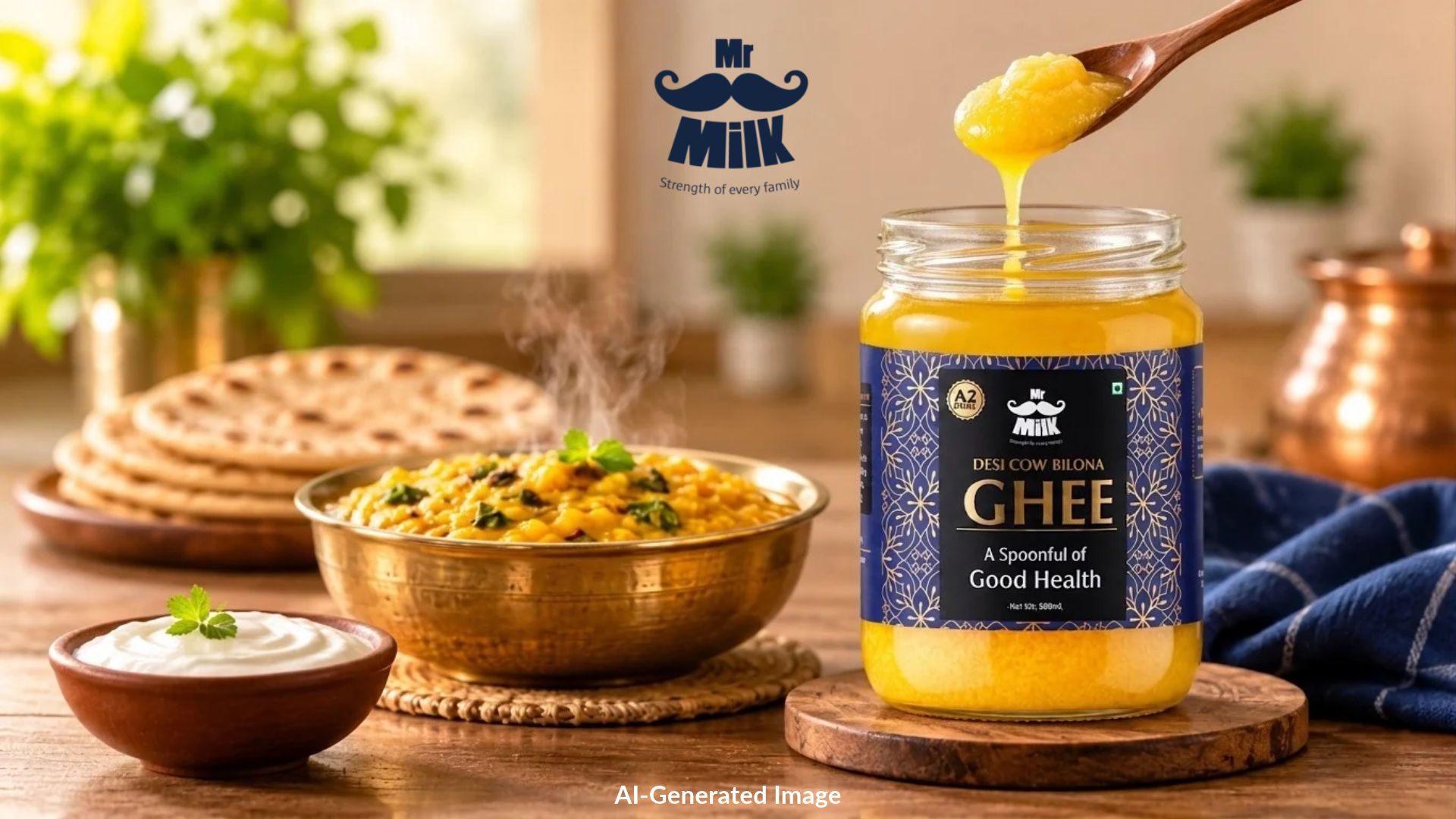
Adding a small amount of Desi Cow Ghee to freshly cooked dal or hot rice can enhance the flavour and aroma of an otherwise simple meal. You can also use ghee while preparing a tadka with cumin, garlic or other spices, depending on the recipe.
Try this at home: Prepare your usual moong dal or toor dal and finish it with a little ghee tadka. Serve with rice, roti or a vegetable side dish.
This is one of the easiest ways to incorporate ghee into your family's regular meals without changing your usual cooking routine.
2. Make Khichdi More Flavourful:
When the weather becomes cooler, a warm bowl of khichdi can be a comforting choice for lunch or dinner. Made with rice, dal and optional vegetables, it is a familiar one-pot meal in many Indian homes.
A little Desi Cow Ghee stirred into freshly cooked khichdi can add richness and a pleasant aroma. You can also use ghee to temper cumin and other spices before adding the rice, dal and water.
For a more varied meal, serve your khichdi with vegetables, a suitable portion of dahi or another accompaniment your family enjoys.
Everyday tip: You do not need to change the basic recipe. A small amount of ghee can be enough to bring out the flavours of familiar ingredients.
3. Use Ghee for Rotis and Parathas:
Freshly made rotis and parathas are staples in many Indian kitchens, and ghee is a traditional accompaniment to both.
You can lightly apply Desi Cow Ghee to a freshly cooked roti or use it while preparing parathas. It also works well in recipes for aloo paratha, paneer paratha and other stuffed flatbreads.
If you enjoy making breakfast at home, try serving a hot paratha with dahi or a vegetable accompaniment for a satisfying meal.
Ghee can contribute to your overall dietary fat intake, so the amount you use should suit your individual needs and the rest of your diet.
4. Bring Out the Flavour of Everyday Vegetables:
Vegetables do not always need elaborate preparation to taste good. Sometimes, a simple cooking method and a few familiar ingredients are all you need.
Desi Cow Ghee can be used to sauté vegetables, prepare a tadka or add finishing flavour to dishes such as beans, carrots, peas and potatoes.
It also works in traditional preparations such as jeera aloo and seasonal vegetable sabzis. The aroma of ghee pairs particularly well with cumin and other commonly used Indian spices.
Try this at home: Prepare a simple vegetable sabzi using your usual ingredients and cooking method. Add a modest amount of ghee where it complements the recipe, rather than increasing the quantity of fat in every dish.
The idea is to make everyday cooking enjoyable while keeping meals varied and balanced.
5. Give Traditional Breakfasts a Flavourful Touch:
Breakfast offers several easy opportunities to use Desi Cow Ghee in everyday cooking.
Depending on your family's preferences, you can use it for:
Poha: Add a little ghee while tempering mustard seeds, curry leaves and other ingredients if it suits your recipe.
Upma: Use ghee to sauté the spices and vegetables before adding semolina and water.
Parathas: Cook your favourite plain or stuffed paratha with an appropriate amount of ghee.
Dosa: Use ghee during cooking for a different flavour, if desired.
Homemade sheera: Use ghee as part of the traditional preparation for this familiar Indian sweet.
These options make it easy to enjoy the ingredient in different ways rather than relying on a single dish.
6. Use Desi Cow Ghee in Seasonal Comfort Foods:
As the festive season approaches and mornings and evenings become cooler, many families prepare dishes such as dal khichdi, vegetable pulao, stuffed parathas and homemade sweets more frequently.
Ghee can be used in these recipes for flavour and texture. For example, you might add it to a freshly prepared vegetable pulao, use it in a traditional halwa or include it in ladoos made at home.
However, cooler weather does not automatically mean that your body needs more ghee. Your overall dietary requirements depend on factors such as activity level, health needs and the rest of your meals.
The simplest approach is to enjoy traditional dishes in portions that work for your household and use ghee according to the recipe and your preferences.
7. What Should You Look for When Choosing Desi Cow Ghee?
The way ghee is made, the ingredients used and how the product is handled can all be relevant when deciding which one to buy.
Here are a few things worth checking.
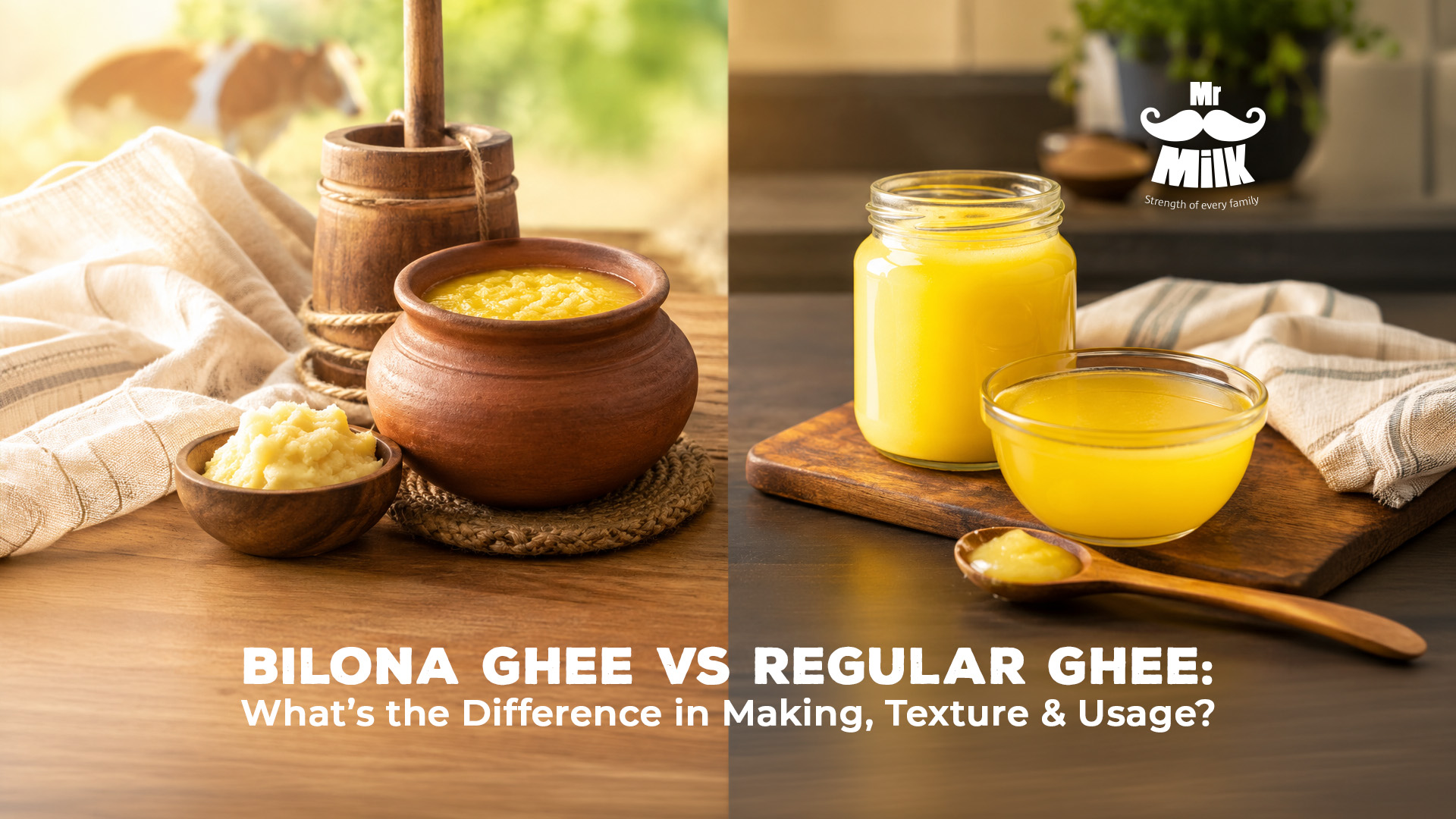
Understand the preparation method. If you prefer traditionally prepared ghee, learn how it is made. The Bilona method, for example, involves converting milk into curd, churning the curd to obtain butter and then heating the butter to prepare ghee.
Check the product information. Read the label for the product name, ingredients, manufacturer details, storage instructions and applicable food licensing information.
Consider the flavour and aroma. Ghee can have a distinctive aroma and flavour influenced by its preparation and ingredients. Choose a product that suits your cooking preferences.
Pay attention to handling and storage. Follow the manufacturer's instructions and use a clean, dry spoon when taking ghee from the container.
At Mr. Milk, our Bilona Ghee is made using a traditional curd-based preparation method with milk from Gir and Sahiwal cows raised on our farm near Lonavala. This approach connects the finished product with the traditional process of preparing ghee from curd rather than directly from cream.
If you would like to explore this method further, you can learn more about Mr. Milk's Bilona Ghee.
8. How to Store Desi Cow Ghee in Your Kitchen:
Good storage habits help maintain ghee's quality during everyday use.
Keep these simple practices in mind:
Store ghee in a clean, dry container with its lid closed properly.
Use a clean, completely dry spoon to avoid introducing moisture or food particles.
Keep the container away from direct sunlight, excess heat and strong-smelling ingredients.
Follow the storage and shelf-life instructions provided on the product label.
Check the product for unusual changes in smell, appearance or texture, and do not consume it if you suspect spoilage.
Unlike milk and dahi, ghee is generally stored according to the manufacturer's instructions and does not usually require the same refrigeration routine as fresh dairy products. Always follow the specific instructions for the product you purchase.
Enjoyed this article?
Experience authentic Bilona-crafted A2 Desi Cow Ghee — made the traditional way, delivered fresh to your door.
Frequently Asked Questions
Make Everyday Meals More Enjoyable with Mr. Milk
As Pune's weather turns cooler, you do not need to completely change your family's food habits. Familiar meals such as dal, rice, khichdi, parathas and seasonal vegetables can continue to be part of your everyday routine.
Desi Cow Ghee offers a traditional way to add aroma and flavour to these dishes. By choosing a preparation method you understand, using an appropriate quantity and storing the product carefully, you can make it a practical part of your kitchen.
Explore Mr. Milk's Bilona Ghee range and discover a traditional ingredient for your family's everyday cooking.
Author
Shradhaa S Gokhale
Traditional dairy experts specialising in authentic A2 Desi Cow Ghee made using the ancient Bilona process. Passionate about farm-to-table nutrition, Ayurvedic food wisdom, and supporting indigenous Indian cow breeds.
More from Mr. Milk