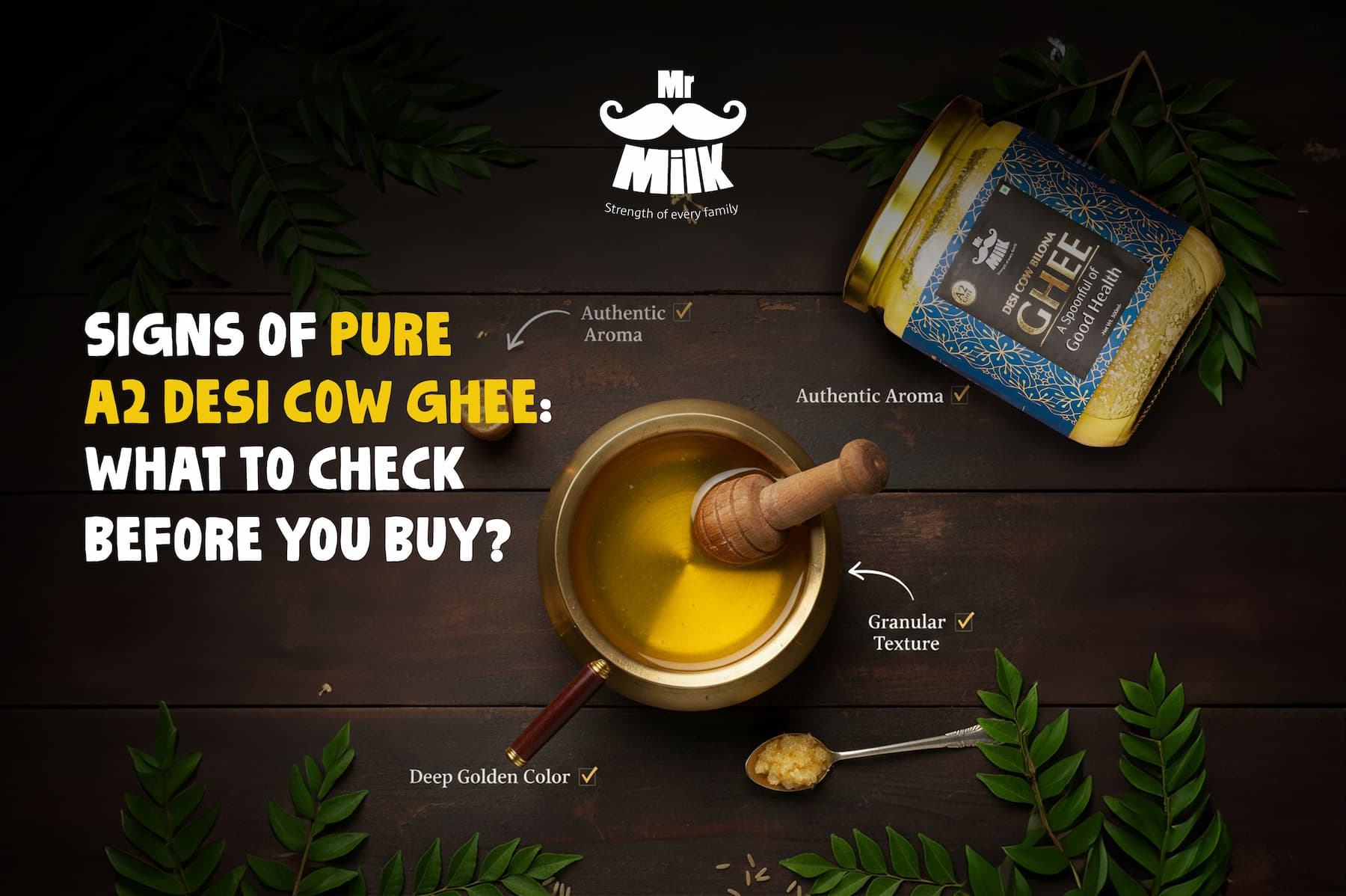
Signs of Pure A2 Desi Cow Ghee: What to Check Before You Buy?
Summary:
This blog serves as a comprehensive buyer's guide for identifying authentic A2 Desi Cow Ghee. It educates consumers on the physical markers of purity - such as the "Danedaar" texture and golden hue - while emphasising the importance of the traditional Bilona extraction method. By understanding these signs, readers can avoid adulterated products and reap the full medicinal and nutritional benefits of real Desi ghee.
Key Highlights:
Texture & Colour: Authentic A2 ghee should have a naturally grainy (Danedaar) consistency and a distinct yellowish-golden colour.
The Aroma Test: High-quality ghee features a rich, nutty, and soothing aroma that is unmistakable when opened.
Extraction Method: True A2 ghee is typically made using the Bilona method (churning curd), rather than just heating cream.
Melting Point: Pure ghee should melt instantly at body temperature and turn transparent when heated over a flame.
If you step into an Indian kitchen, the one aroma that feels like "home" is the rich, nutty scent of ghee. But today, walking down a supermarket aisle or scrolling through an e-commerce site, finding that nostalgic purity is harder than ever. With terms like "A2," "Vedic," and "Organic" splashed everywhere, how do you distinguish between a mass-produced fat and the Best A2 Desi Cow Ghee in India?
Authentic A2 Ghee is more than just a cooking medium; it’s a wellness staple. Whether you are using it for your morning bullet coffee or drizzling it over hot dal, purity matters. Here is your definitive guide to identifying real A2 Bilona Ghee before you hit that "buy" button.
Quick Checklist: What Should You Check Before Buying Ghee?
Before purchasing Desi Cow Bilona Ghee, look for:
A clearly stated ingredient list
Transparent information about the milk source
A clearly explained Bilona preparation method
Natural variation in colour and texture
A characteristic ghee aroma
Clear manufacturer and batch information
Transparent quality and sourcing practices
The more information a brand provides about its product and process, the easier it is for you to make an informed choice.
What Is Desi Cow Bilona Ghee?
Desi Cow Bilona Ghee is traditionally prepared by first converting milk into curd, churning the curd to obtain butter, and then heating the butter to make ghee. The traditional process can be broadly understood as:
Milk → Curd → Churning → Butter → Ghee
The term Bilona refers to the traditional churning process used to separate butter from curd.
However, it is important to look beyond the word Bilona on the label. If a brand claims to follow the Bilona method, it should be able to explain how its ghee is made.
1. Check the Ingredient Label:
The first thing to check on any packaged ghee is the label. Look for clear information about:
Ingredients
Product name
Net quantity
Manufacturer or marketer
Batch or lot information
Date marking
Storage instructions
Applicable food and regulatory information
A transparent label makes it easier to understand what you are buying and who is responsible for the product.
2. Check the Milk Source
The quality and character of ghee begin with its raw material: milk.
When buying Desi Cow Ghee, check whether the brand clearly explains where its milk comes from.
Useful questions to ask include:
Does the brand identify the source of its milk?
Does it explain the cow breed or sourcing?
Does it have its own farm or work with external suppliers?
Does it provide information about its dairy practices?
Can the brand explain how the milk moves from source to finished product?
For a farm-based dairy brand, this information can provide valuable insight into the product's journey.
At Mr. Milk, the dairy story begins at our farm, where we work with indigenous Gir and Sahiwal cows and follow a farm-to-product approach.
Bottom line: The more clearly a brand explains its milk source, the easier it is for consumers to understand what they are buying.
3. Understand the Bilona Process
If the label says "processed" or "refined," it isn’t the real deal. Traditional Bilona Ghee is made through a laborious, ancient process:
Step 1: Boiling A2 Milk.
Step 2: Setting it into curd.
Step 3: Churning the curd with a wooden stirrer (Bilona) to get makkhan.
Step 4: Slowly heat the makkhan until the water evaporates.
This traditional bilona method preserves the fat-soluble vitamins (A, D, E, K) and ensures the ghee retains its medicinal properties. Most commercial brands skip the curd stage and use cream (malai) to save time, but in doing so, they lose the authentic flavour and health benefits.
Buy pure A2 Desi Cow Ghee from Mr. Milk
Made using the traditional Bilona method, and experience the difference of farm-fresh purity. Free Shipping All Over India!
4. Appreciate the Natural Colour, Texture & Aroma
Colour, texture and aroma are some of the easiest ways to appreciate the natural character of Desi Cow Bilona Ghee. These qualities can vary naturally depending on the milk source, season, preparation and storage conditions.
Ghee colour can range from a soft yellow to a deeper golden shade. Rather than looking for one “correct” colour, it is better to appreciate the natural variation that can occur in traditionally prepared ghee.
Texture can also change with temperature. Ghee may appear smooth and soft in warmer conditions and become firmer or more grainy as temperatures fall. A naturally grainy, Danedaar texture is often associated with traditionally prepared ghee, although texture can vary from batch to batch.
Then comes the aroma - the moment you open the jar. Good ghee has a characteristic rich, buttery aroma that immediately adds to the sensory experience of traditional Indian cooking.
Together, colour, texture and aroma give you a glimpse into the natural character of ghee and the traditional food experience it brings to the kitchen.
5. Check the Brand's Transparency:
This is one of the most useful checks when buying ghee online.
A trustworthy brand should be able to tell you more than what is printed on the front of the jar.
Look for information about:
Where the milk comes from
How the ghee is prepared
Where it is manufactured
Who makes the product
Batch and product details
Storage recommendations
Customer support
The brand's dairy or farm practices
This is particularly important when buying premium traditional dairy products online.
At Mr. Milk, our approach is built around greater visibility into the journey from our dairy farm to the finished product.
Bottom line: A brand that openly explains its sourcing and production process gives consumers more information with which to make a buying decision.
6. Packaging & Delivery
Ghee is a sensitive product. Always look for brands that use glass jars instead of plastic. Plastic can leach chemicals into the ghee, especially during transit in India’s heat. Furthermore, reliability matters.
Ensure the brand offers secure shipping. For instance, you can now enjoy the convenience of free shipping all across India when you choose a premium brand that values customer experience as much as product purity.
Conclusion:
Don't settle for "standard" when your health is on the line. Real ghee should support your gut, boost your immunity, and taste like tradition.
Ready to upgrade your kitchen?
Buy Authentic A2 Bilona Ghee today and get free shipping all across India!
Enjoyed this article?
Experience authentic Bilona-crafted A2 Desi Cow Ghee — made the traditional way, delivered fresh to your door.
Frequently Asked Questions (FAQs):
Author
Mr. Milk Team
Traditional dairy experts specialising in authentic A2 Desi Cow Ghee made using the ancient Bilona process. Passionate about farm-to-table nutrition, Ayurvedic food wisdom, and supporting indigenous Indian cow breeds.
More from Mr. Milk