The Growing Demand for A2 Desi Cow Ghee in Urban India

Summary:
As urban Indian consumers increasingly prioritise holistic wellness, A2 Desi cow ghee has transitioned from a traditional kitchen staple to a premium modern superfood. Free from the gut-irritating A1 beta-casein protein found in commercial dairy, authentic A2 ghee crafted via the traditional Bilona method is witnessing a massive surge in demand. Driven by rising disposable incomes, awareness of lactose intolerance, and a collective return to clean, ancestral nutrition, city dwellers are actively choosing this nutrient-dense fat to boost immunity, improve digestion, and elevate their daily diet.
Key Highlights:
The A2 Advantage: Unlike regular commercial ghee, A2 Desi cow ghee is sourced exclusively from indigenous Indian cow breeds (like Gir and Sahiwal), making it easier to digest and completely free of the A1 protein.
The Traditional Bilona Method: Modern urbanites are willing to pay a premium for ghee made using the authentic, slow-churned curd process (Bilona), which preserves vital nutrients and butyric acid.
Gut Health & Immunity: The modern demand is heavily driven by its functional health benefits, including reducing inflammation, enhancing metabolism, and providing rich doses of vitamins A, D, E, and K.
Premiumization of Urban Retail: Rising disposable incomes and a shift toward clean-label, organic foods have turned A2 ghee into a lifestyle and wellness essential in Tier-1 and Tier-2 Indian cities.
If you step into any modern Indian kitchen today, you’ll likely find a fascinating mix of the old and the new. You will see air fryers sitting next to cast-iron tawas, and avocado toast being prepped alongside traditional pohas. But there is one specific traditional staple that is making a massive, undeniable comeback in urban households: A2 Desi Cow Ghee.
For years, refined oils and imported butter pushed our humble ghee to the back of the pantry. We were told to fear the fats. However, urban India is waking up to a nutritional realisation. It turns out that our grandparents were right all along. The secret to holistic health wasn't a new superfood from the West; it was the golden elixir simmering on our own stovetops.
But why is the urban demand shifting specifically toward A2 Desi Cow Ghee? Let’s break down what makes this traditional fat a modern must-have.
What is A2 Ghee, and Why Does the Protein Matter?
To understand the surge in demand, we first need to look at the source: the cow. Regular commercial ghee is often made from a mix of milk types, predominantly from Western crossbred cows (like Holstein-Friesian or Jersey). These cows produce milk containing the A1 beta-casein protein.
In contrast, A2 Ghee is crafted exclusively from the milk of indigenous Indian breeds, often referred to as Desi Cows.
The A1 vs. A2 Protein Difference:
A1 Protein: Modern commercial milk contains A1 protein, which breaks down into a compound called BCM-7 during digestion. This compound is frequently linked to bloating, inflammation, and stomach discomfort.
A2 Protein: Indigenous Indian breeds, like the revered Gir Cows, naturally produce milk with the A2 beta-casein protein. This structure is structurally similar to human breast milk, making it incredibly gentle on the human digestive system.
When you choose A2 Desi Cow Ghee, you are choosing a fat that your body inherently recognises and knows how to process. It is completely free from the digestive irritants found in mass-produced dairy.
Why is Urban India Obsessed with A2 Desi Cow Ghee?
Urban living is fast, highly stressful, and often plagued by sedentary routines. This lifestyle shift has caused a rise in gut health issues, food intolerances, and chronic fatigue. Urban parents and fitness enthusiasts are actively seeking foods that offer functional health benefits.
Here is why A2 Milk Ghee has become the ultimate pantry upgrade:
It Heals the Gut: A2 ghee is exceptionally rich in butyric acid, a short-chain fatty acid that nourishes the cells of the intestinal wall. It actively reduces inflammation and supports smooth digestion.
High Smoke Point for Indian Cooking: Indian cooking involves deep frying, tempering (tadka), and high-heat roasting. A2 ghee has a remarkably high smoke point of around 250°C (482°F). This means it doesn't break down into toxic free radicals when you cook with it.
Lactose and Casein-Friendly: Because the traditional clarification process removes water solids and milk solids, pure A2 ghee is virtually free of lactose and casein. Many people with mild dairy sensitivities find they can enjoy it completely symptom-free.
Immunity Booster: Packed with fat-soluble vitamins like A, D, E, and K, it helps boost immunity and promotes healthy, glowing skin from within.
The Bilona Difference: How Authentic Ghee is Made?
Not all ghee labelled "A2" is created equal. The magic of true A2 Desi Cow Ghee lies not just in the breed of the cow, but in how the fat is extracted.
Most commercial brands use a shortcut: they run milk through heavy industrial centrifuges to separate the cream, which is then directly heated to make ghee. This high-heat process strips away the milk’s vital nutrients and probiotics.
True wellness requires the traditional bilona method. This ancient, slow process honours the integrity of the milk:
The Step-by-Step Bilona Journey:
Milking: Pure, fresh A2 milk is collected from healthy, grass-fed Gir Cows.
Boiling & Curding: The milk is boiled gently and then cooled. It is cultured with a starter to turn the entire batch into whole curd overnight.
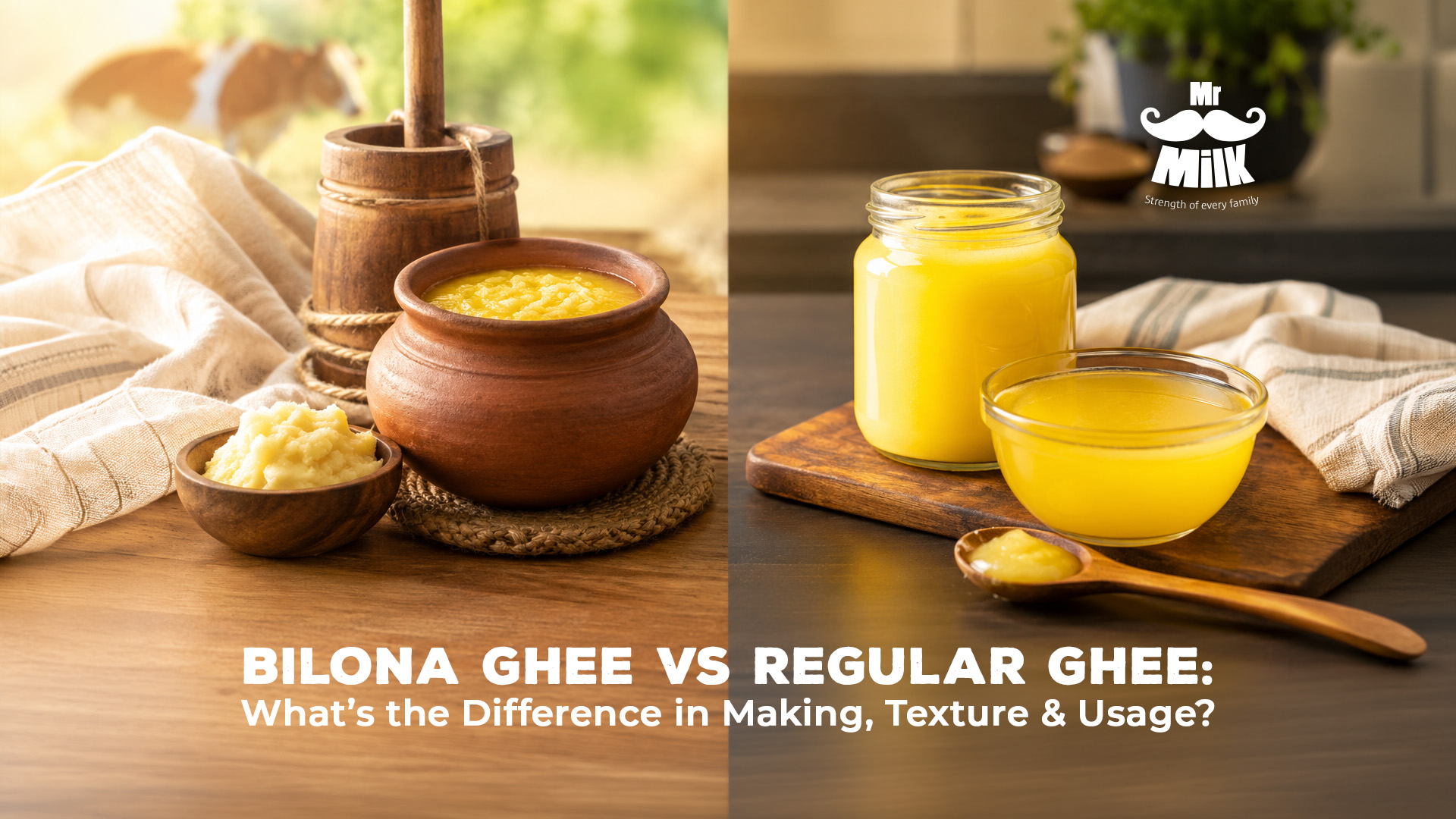
Churning (Bilona): The curd is churned bi-directionally using a traditional wooden churner (called a Bilona) to separate the butter (makkhan) from the buttermilk.
Simmering: This hand-churned butter is melted slowly over a low flame until the water evaporates, leaving behind golden, aromatic, granular Bilona Ghee.
Modern Cream Separation Method vs Traditional Bilona Method:
Feature | Modern Cream Separation | Traditional Bilona Method |
|---|---|---|
Raw Material | Raw cream separated from milk | Cultured whole-milk curd |
Nutrient Retention | Low (damaged by high heat) | High (preserved via slow cooking) |
Texture & Aroma | Smooth, flat aroma | Distinctly granular (danedar), nutty aroma |
Digestibility | Heavy on the stomach | Very light and easily digestible |
Bring A2 Goodness to Your Kitchen with Mr. Milk:
Finding authentic, unadulterated ghee in the middle of a bustling metro city can feel like an uphill battle. Labels can be misleading, and sourcing can be opaque.
This is exactly where Mr. Milk steps in. We bridge the gap between rural Vedic traditions and your modern urban lifestyle. Our A2 Desi Cow Ghee is sourced directly from our own technologically advanced yet ethically run farms, where our Gir Cows are treated like family, fed balanced organic diets, and milked under strict hygienic conditions.
We strictly follow the traditional bilona method to ensure that every single jar delivered to your doorstep contains the rich, granular texture and nostalgic aroma of real, pure ghee.
The Best Part?
You don’t have to hunt for it. Mr. Milk offers Free shipping all across India, bringing this pristine golden elixir straight from our farm to your kitchen table, no matter where you live.
Enjoyed this article?
Experience authentic Bilona-crafted A2 Desi Cow Ghee — made the traditional way, delivered fresh to your door.
Frequently Asked Questions (FAQs):
Author
SEO Mr.Milk
Traditional dairy experts specialising in authentic A2 Desi Cow Ghee made using the ancient Bilona process. Passionate about farm-to-table nutrition, Ayurvedic food wisdom, and supporting indigenous Indian cow breeds.
More from Mr. Milk