Why Desi Cow Ghee Is a Must-Have in Traditional Indian Festive Cooking
Summary:
Traditional Indian festive cooking relies on pure Desi Cow Ghee to achieve authentic taste, deep aroma, and cultural significance. Made using time-tested methods, A2 cow ghee enhances the flavour profile of traditional sweets and savouries while offering vital nutrients that support digestion during high-calorie celebrations. Integrating pure ghee into holiday dishes preserves heritage while bringing holistic wellness to the dining table.
Key Highlights:
Cultural & Sacred Value: Essential for traditional prasad and festive offerings, symbolising purity and auspiciousness in Indian rituals.
Unmatched Culinary Profile: Adds a rich, nutty flavour, high smoke point, and irresistible aroma to traditional sweets like ladoos and halwa.
Digestive & Health Benefits: Rich in A2 protein, healthy fats, and fat-soluble vitamins that aid digestion and sustain energy during celebrations.
Heritage Craftsmanship: Bilona-method Desi Cow Ghee keeps ancient culinary traditions alive in modern festive kitchens.
Festivals in India are closely connected with food. From laddoos and modaks to halwa, puris, kheer and festive prasad, many of our most-loved recipes begin with one simple ingredient: ghee.
But traditionally, ghee was never just about adding richness to food. It was valued for its aroma, texture, cooking versatility and its place in Indian culinary traditions.
Today, as more families become conscious of where their food comes from, Desi Cow Bilona Ghee is finding its way back into festive kitchens.
Made through the traditional bilona method, this style of ghee brings together an age-old preparation process and the richness associated with milk from indigenous Desi Cows, including Gir Cows.
So, what makes Bilona Ghee particularly special during Indian festivals?
What Makes Desi Cow Ghee Special for Festive Cooking?
Desi Cow Ghee adds aroma, richness and a traditional character to festive recipes that is difficult to replicate with ordinary cooking fats.
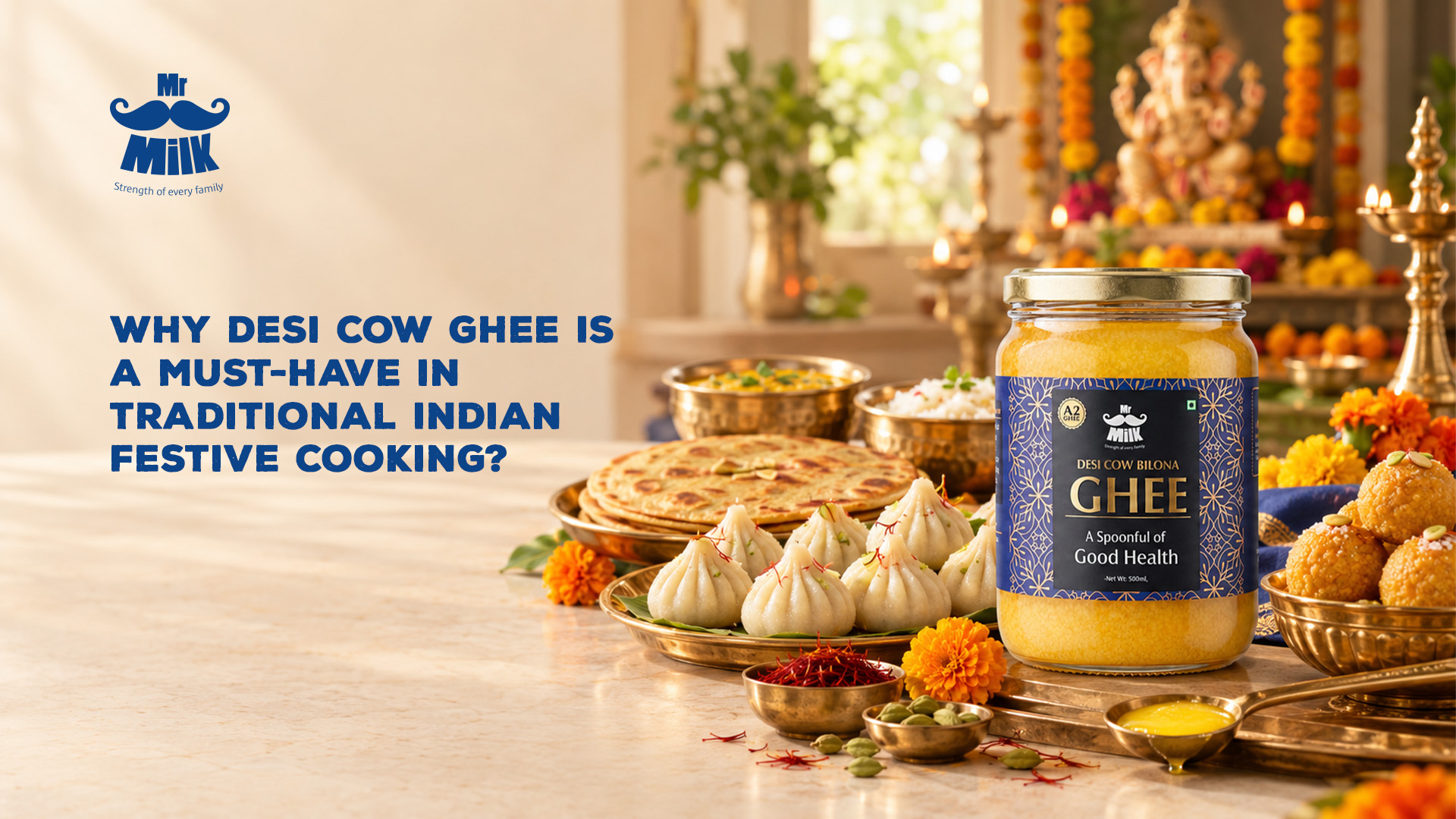
Whether you're preparing homemade modaks for Ganesh Chaturthi, halwa for Diwali, puran poli for Gudi Padwa or festive prasad for a family puja, ghee plays both a culinary and cultural role.
Good ghee can:
Enhance the aroma of sweets and savouries
Give traditional recipes a rich, satisfying mouthfeel
Help roast ingredients such as flour, semolina and nuts evenly
Add richness to festive prasad and mithai
Bring out the natural flavours of spices, dry fruits and grains
Give familiar recipes the nostalgic taste associated with Indian kitchens
For many Indian families, that familiar fragrance of warm ghee is itself part of the festival.
What Is the Traditional Bilona Method of Making Ghee?
The traditional bilona method involves making curd from milk, churning the curd to separate the butter, and then slowly heating that butter to make ghee.
This is different from methods where cream is directly separated from milk and converted into butter and then ghee.
The traditional process generally follows these steps:
Fresh A2 milk is cultured into curd.
The curd is traditionally churned to separate butter.
The butter is collected and gently heated.
As it cooks, moisture evaporates and milk solids separate.
The clarified ghee is then filtered and stored.
This slower preparation is one reason Bilona Ghee is appreciated for its distinctive aroma, grainy texture and deep, traditional flavour.
For festive cooking, those characteristics can make a noticeable difference, particularly in recipes where ghee is one of the main ingredients.
Why Does Bilona Ghee Work So Well in Indian Festive Recipes?
Indian festive cooking often depends on simple ingredients prepared carefully.
Take a traditional besan ladoo. Besan, sugar, cardamom and nuts may seem uncomplicated, but the way the besan is roasted in ghee determines much of its aroma and final texture.
The same applies to:
Modak
Besan ladoo
Sooji halwa
Atta halwa
Puran poli
Kheer
Mysore pak
Panjeri
Festive puris
Prasad recipes
Ghee helps carry the flavours of ingredients such as cardamom, saffron, nuts & roasted flour.
That is why the quality and character of the ghee matter when you're preparing recipes where ghee is not merely a cooking medium but part of the final flavour.
Is Gir Cow Ghee Different from Regular Ghee?
Gir Cow Ghee is made from milk sourced from Gir Cows, an indigenous Indian cattle breed.
Gir Cows are traditionally associated with Gujarat and are recognised for their distinctive physical characteristics and importance in Indian dairy farming. When milk from Gir Cows is used to make ghee through a traditional bilona process, the resulting product is commonly referred to as Gir Cow Ghee.
Indigenous Desi Cows such as Gir Cows are also associated with A2-type beta-casein in their milk, a characteristic that has been studied for potential differences in digestion compared with A1 beta-casein.
However, it's worth looking beyond the breed name alone.
When choosing ghee, consider:
Milk source: Is the source clearly mentioned?
Breed information: Does the brand explain whether indigenous cows are used?
Preparation: Is the traditional bilona method clearly described?
Ingredients: Is the product free from unnecessary additives?
Batch and packaging information: Is the product traceable?
Brand transparency: Does the company explain where and how the ghee is made?
Breed, sourcing and preparation method together tell you much more than a label alone.
Why Is Ghee So Important in Traditional Indian Festivals?
Food during Indian festivals is about more than nutrition.
It represents hospitality, family traditions, celebration and offering.
Ghee has traditionally been used in Indian households for cooking, sweets and religious preparations. It is also commonly used in prasad and festive dishes because of its rich aroma and culinary versatility.
For many families, making sweets at home with ghee also means having greater control over the ingredients.
You can choose the flour, nuts, sweetener, spices and ghee that go into your recipes instead of relying entirely on packaged sweets.
A thoughtfully prepared homemade festive dish can make the celebration feel both personal & traditional.
How Can You Use Desi Cow Bilona Ghee During Festivals?
You don't need complicated recipes to make good use of ghee during the festive season.
Try using Desi Cow Bilona Ghee for:
1. Homemade Modaks: Use desi cow ghee while roasting coconut, nuts or the ingredients for the filling. A small amount can add a beautiful aroma to the finished modak.
2. Besan Ladoo: Slowly roast besan with ghee until the raw aroma disappears and the mixture develops a rich, nutty fragrance.
3. Halwa: Ghee is traditionally used to roast semolina, atta or other grains before adding liquid and sweeteners.
4. Puran Poli: A little ghee brushed over freshly prepared puran poli adds richness and complements the sweet filling.
5. Festive Prasad: From simple halwa to traditional sweets, ghee can be used to prepare comforting homemade prasad for family celebrations.
How Do You Choose the Best Desi Cow Ghee in India?
The best desi cow ghee in India isn't simply the one with the most attractive label; look for clear sourcing, a credible preparation method and ingredient transparency.
Before buying, check:
Milk source: Is the source clearly mentioned?
Breed information: Does the brand explain whether indigenous cows are used?
Preparation: Is the traditional bilona method clearly described?
Ingredients: Are unnecessary additives avoided?
Batch and packaging information: Is the product traceable?
Brand transparency: Does the company explain where and how the ghee is made?
These details help you make a more informed choice rather than selecting a product based solely on marketing claims.
Why Choose Mr. Milk Desi Cow Bilona Ghee?
At Mr. Milk, the focus is on bringing traditional dairy practices closer to modern Indian households.
Our Desi Cow Bilona Ghee is prepared with attention to traditional methods and the character of milk from indigenous cows.
It is made for families who want to bring the richness and familiar aroma of traditionally prepared ghee into everyday meals as well as festive cooking.
And because good food should be accessible wherever your family lives, Mr. Milk offers Free shipping on all orders across India.
Whether you're preparing festive modaks, ladoos, halwa, prasad or simply adding a spoonful of ghee to a warm meal, choosing thoughtfully sourced ghee can make everyday food feel a little more special.
Enjoyed this article?
Experience authentic Bilona-crafted A2 Desi Cow Ghee — made the traditional way, delivered fresh to your door.
FAQs
Bring the Tradition of Ghee Back to Your Festive Kitchen
Festivals don't need complicated ingredients to feel special. Sometimes, it is the familiar aroma of ghee heating in the kitchen, the sound of a ladoo mixture being stirred, or a freshly made modak being offered to the family that creates the memory.
Choose thoughtfully prepared Desi Cow Bilona Ghee for your festive cooking and bring a little more of that traditional richness to your celebrations.
Order your Mr. Milk Desi Cow Bilona Ghee today - with Free shipping on all orders across India.
Author
Shradhaa S Gokhale
Traditional dairy experts specialising in authentic A2 Desi Cow Ghee made using the ancient Bilona process. Passionate about farm-to-table nutrition, Ayurvedic food wisdom, and supporting indigenous Indian cow breeds.
More from Mr. Milk
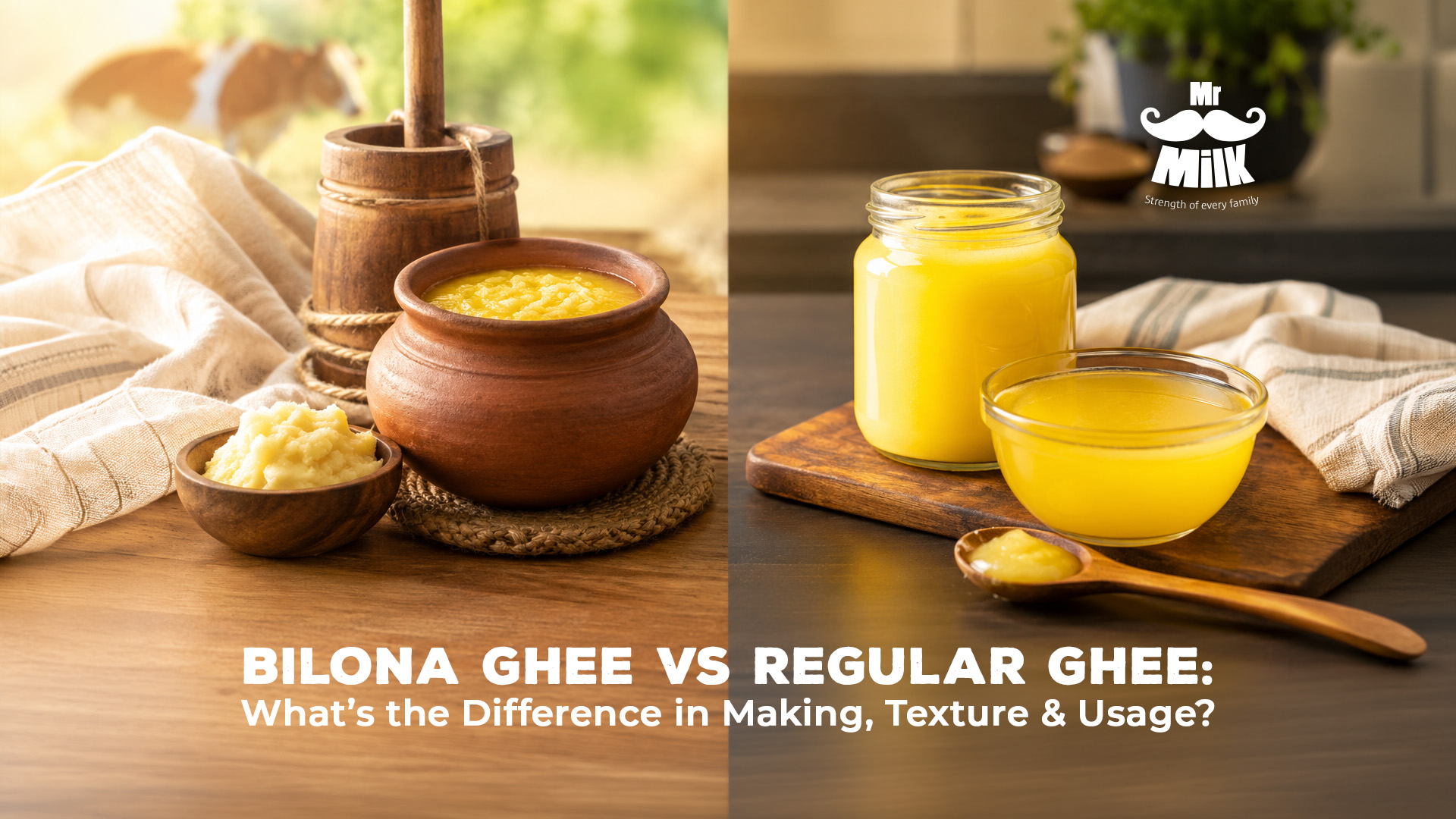
Bilona Ghee vs Regular Ghee: What’s the Difference in Making, Texture & Usage?
9 min read
How Much Ghee Should You Eat in a Day? A Practical Guide for Everyday Cooking
9 min read
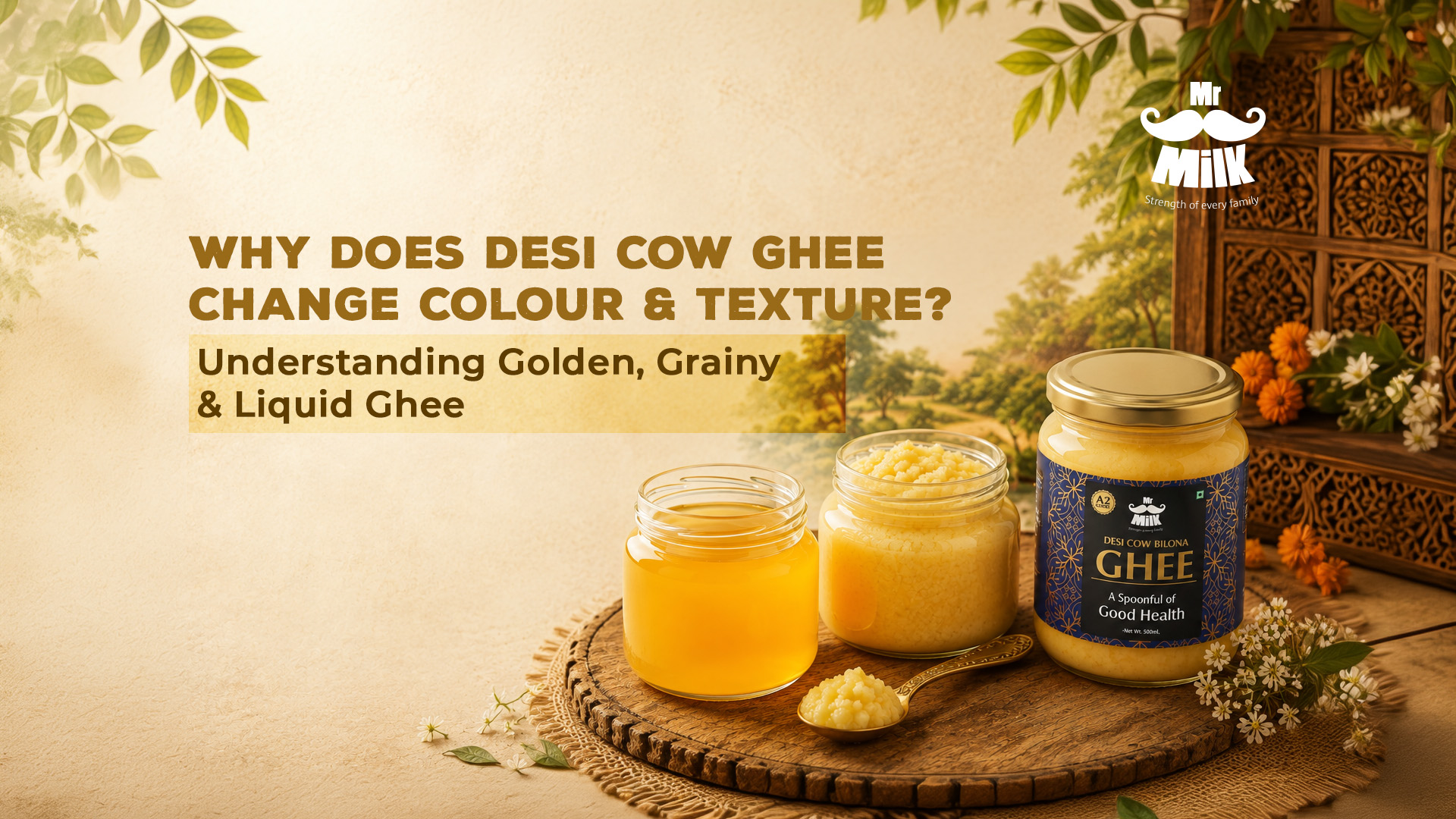
Why Does Desi Cow Ghee Change Colour & Texture? Understanding Golden, Grainy & Liquid Ghee
8 min read